Decolonial pedagogies: Reflections from the Two-Row on the Grand
Last year, fellow SOPR student, Janna Martin, and I both participated in the first leg of the Two Row on the Grand (Two Row). The Two Row is an annual 10 day paddle down the Grand River from Cambridge, Ontario to Port Maitland. 2024 is the ninth year this event has been happening. As described by the event organizers:
“the Two Row on the Grand canoe paddle is an embodiment of the Two Row Wampum – the original peace treaty between Indigenous and settler communities. We envision an annual canoe trip where participants, Indigenous and non-Indigenous, build mutual respect and understanding of individual values and culture through sharing the river, meals, campgrounds, mutual aid, cultural/environmental teachings, friendship and summer fun” (Two Row on the Grand).
The event is led by Ellie Joseph, a former school teacher from Six Nations and Jay Bailey, a Canadian of Dutch descent. Leading this event is no small endeavor - over 70 people paddled together last year, with some dropping off after a few days and others joining part-way through. If possible, whenever we passed under bridges we attempted to paddle in two rows, one for Indigenous paddlers and one for non-Indigenous paddlers, as a physical enactment of the Two Row Wampum.
I moved to Guelph in 2019 when I started my role with the Conservation through Reconciliation Partnership, and I feel like I am still very much learning this territory, its histories and present day, and how to live well within my responsibilities. Participating in the Two Row was a beautiful opportunity to begin a relationships with the river. Janna and I had never paddled a canoe before, and last year the water was high. There were lots of rapids pretty much right away so we needed to learn to read the river and communicate well with each other very quickly. I now know to watch for how the surface tension of the river ripples in a “v” shape to indicate there is a large rock underneath. I know to watch the path bubbles and foam take on the river as an indicator of safe passage. I know small adjustments are often all it takes to put you on a totally new path and direction.
The three days we paddled, the Two Row community constantly guided and supported us. There were many safety paddlers and they would often would advance to check out the easiest route through rapids. They would stand on large boulders and show us the safest path. We were all responsible for each other’s safety, and the group always waited until everyone had made it through a group of rapids before we headed off on our journey. We learned to trust ourselves and each other. On the last day, Janna and I hit a large boulder head on, and it spun us around in a large white water rapid. We kept our composure, stayed centered in our boat, and managed to stay upright. We were proud that we had learned how to navigate a mistake together and trust we would be ok.
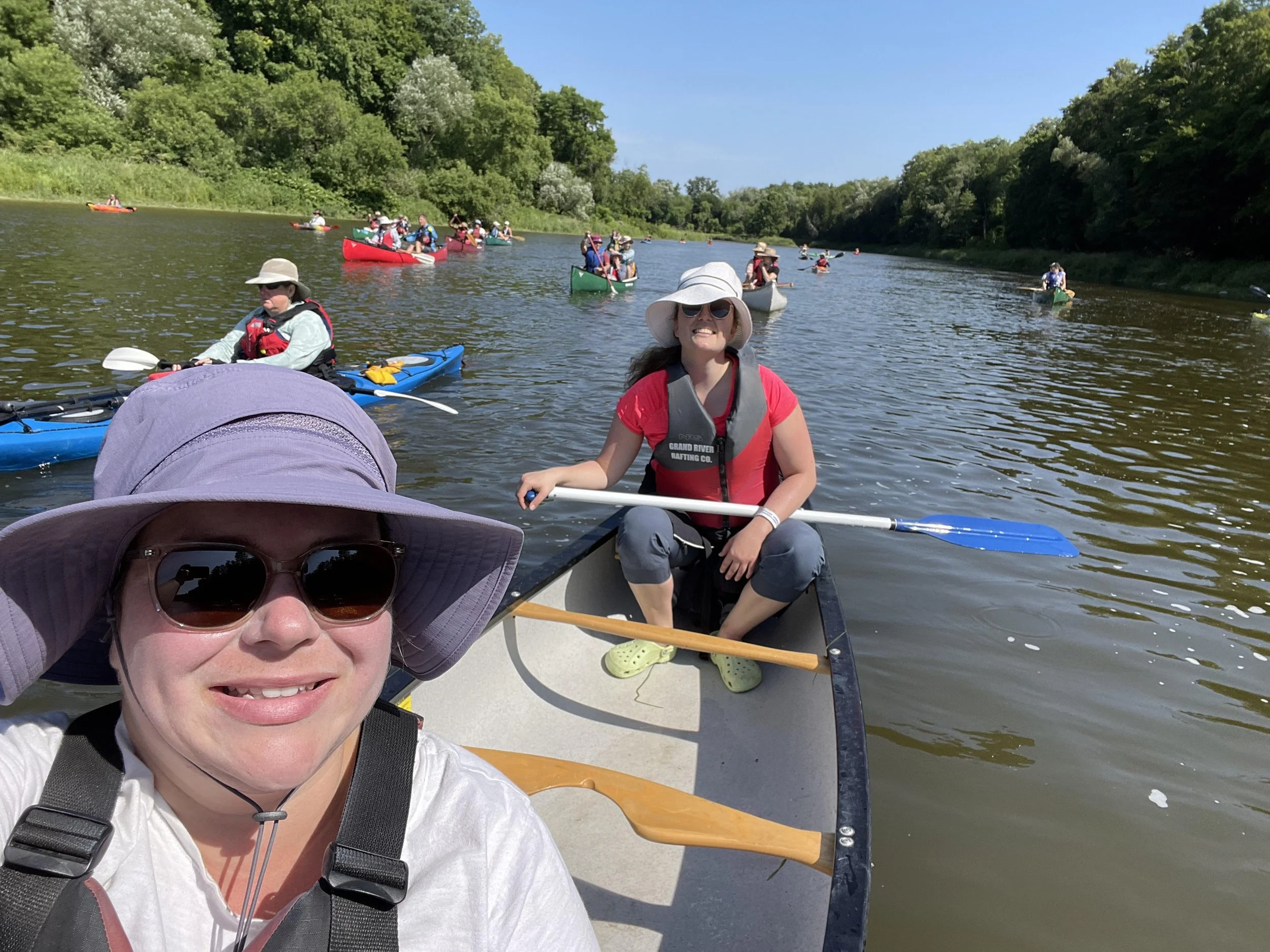
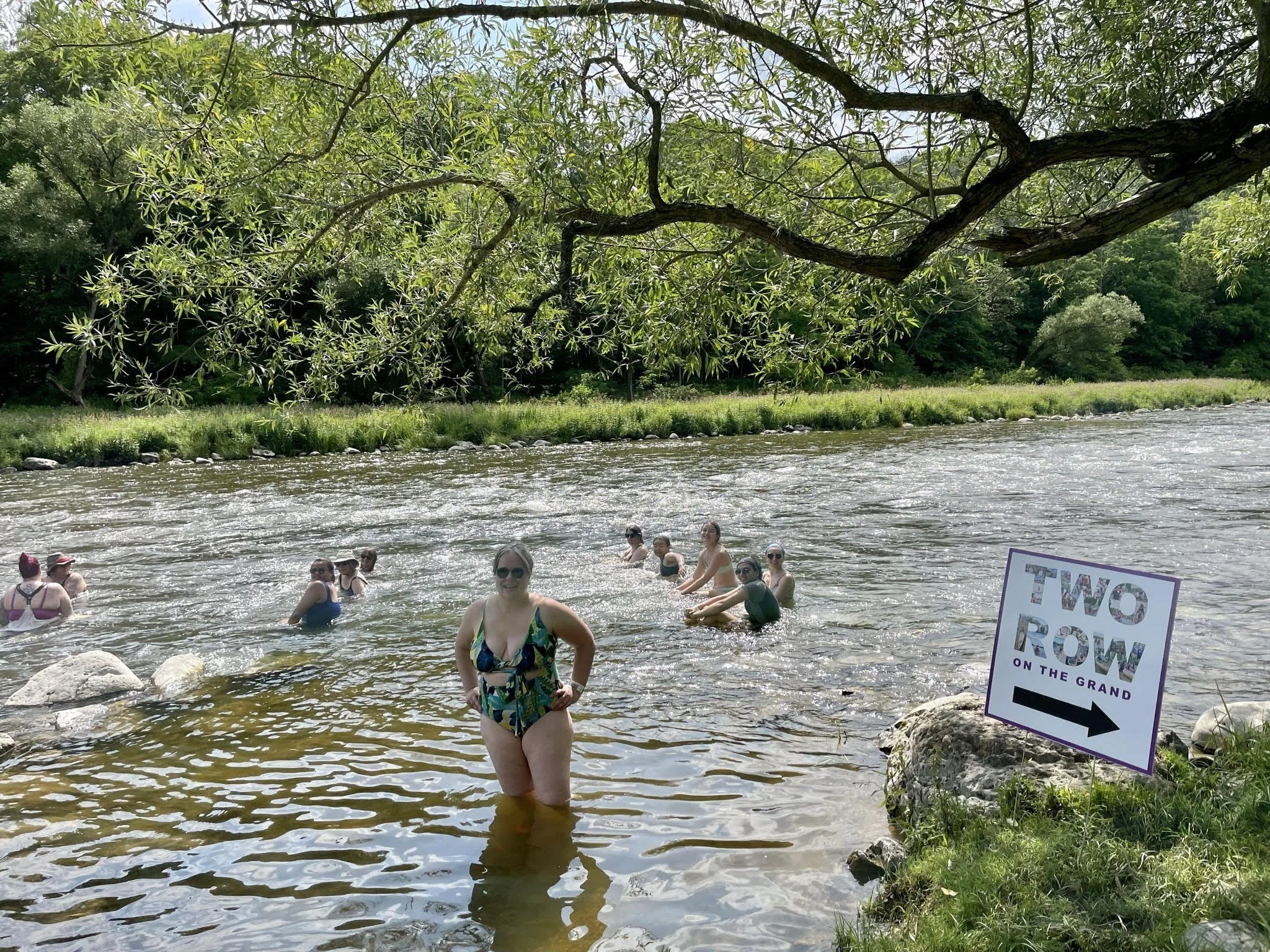
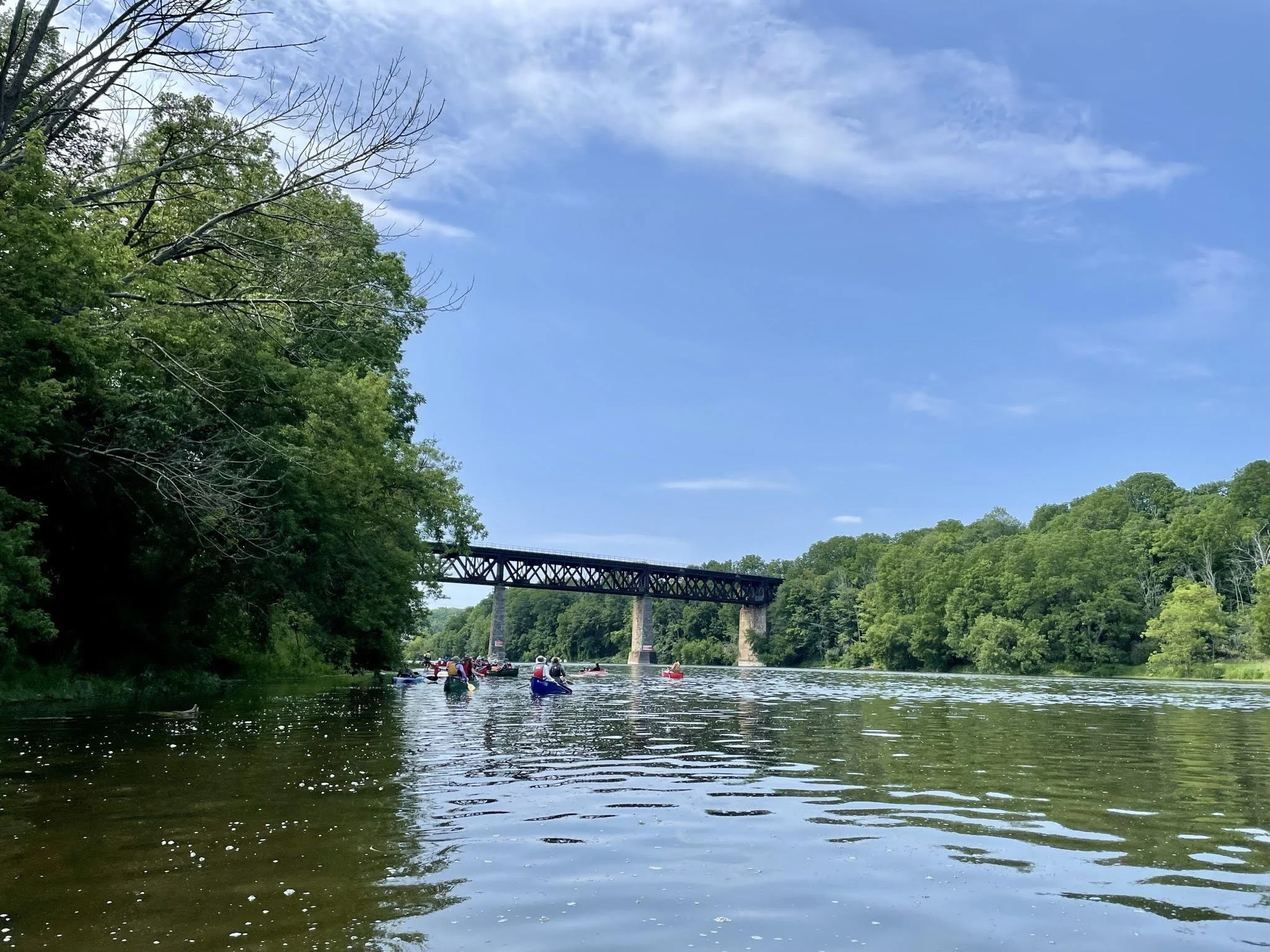
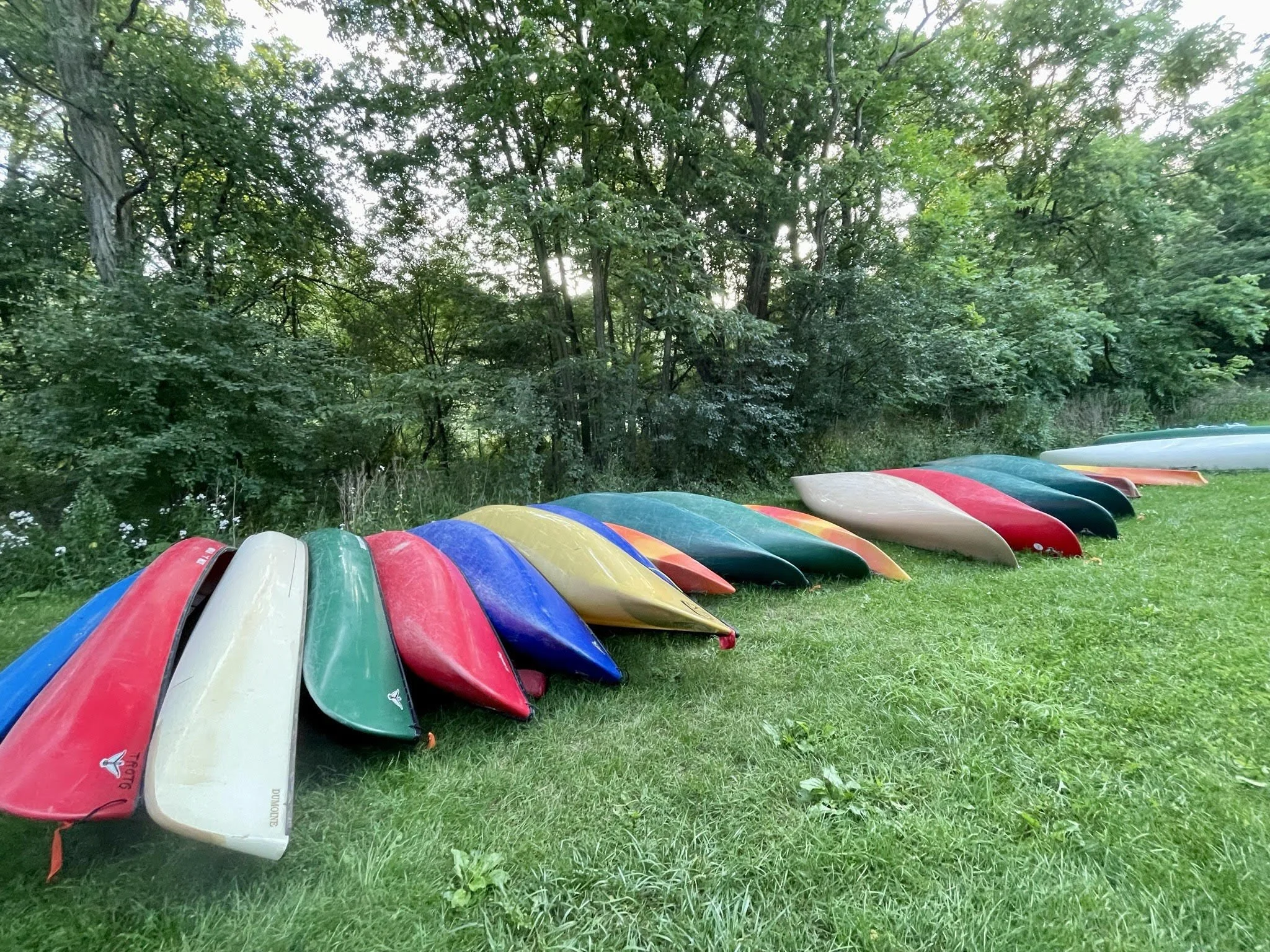
Throughout the three days, we listened to knowledge keepers and heard stories about the Land. We received instructions about how to live well together in this place, and we practiced those instructions every day. We ate together, cleaned up together, and helped each other, creating friendships and community. To me, the Two Row is an example of decolonial pedagogies at work. We were not learning about Land, we were learning with Land (Wildcat et al., 2014). The Two Row is a kind of “multi-cultural decolonizing praxis where all students learn from the land in a shared space where Indigenous epistemologies are central” (Ibid. pg.VI).
From talking to other participants, I know that people become part of the Two Row community, returning year after year to paddle and support the event organizing. It is clear that people develop strong relationships with one another and with the waters. I do wonder what the ripple effects of this kind of learning event might have. Do Two Row community members become involved in grassroots advocacy? Do non-Indigenous Peoples support efforts like Land Back Camp to return Land in the Haldimand Tract to the Haudenosaunee? What are the structural and material effects of this event?
Despite these lingering questions, I am grateful for the opportunity I had to participate in the Two Row last year. While I am not able to participate this year, I hope to again one day. When I look back on my experience, I can see so many connections between the conversations I have been engaging with the literature and my Two Row experience. The practice of paddling and embodying treaty has enriched my reading experience, and so too has the paddling deepend my engagement with the literature.
Works Cited
Two Row on the Grand. (2024, March 5). About us. http://www.tworowonthegrand.com/.
Wildcat, M. Simpson, L.B., Irlbacher-Fox, and Coulthard, G. (2014). Learning from the land: Indigenous land-based pedagogy and decolonization. Decolonization: Indigeneity, Education & Society, 3(3), pp. I-XV.